Kemal’s Nişantaşı map
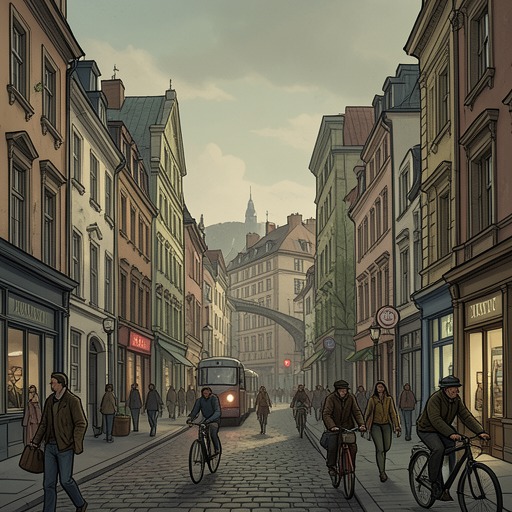
The Museum of InnocenceKemal’s Nişantaşı map converts heartbreak into a system for moving through the city: streets associated with Füsun are marked as forbidden or dangerous, and ordinary routes become tests of self-control. Though devised as an austere plan to forget her, the map also records how completely his memories have reorganized Istanbul around her absence.
A map designed to enforce distance
After repeated attempts to forbid himself from visiting the Merhamet Apartments, waiting for Füsun, or touching things that recalled her, Kemal imposes a stricter discipline. His earlier prohibitions had proved easy to evade: even an errand to buy Sibel flowers could take him near the Şanzelize Boutique. He therefore removes from his mental map a group of streets and places where much of his life has unfolded. The need for such a plan is urgent. His melancholy is visible at Satsat, his mother suspects trouble with Sibel, and he fears both losing Sibel’s support and reaching a personal breaking point.
The map’s colors establish different degrees of risk. Red marks places from which Kemal is absolutely barred, including the Şanzelize Boutique, the Merhamet Apartments, the police station, the corner where Alaaddin has his shop, Kuyulu Bostan Street, and the street still known locally as Emlak Avenue. The prohibition extends to side streets branching from the main thoroughfares, so that a route cannot easily become an excuse for approaching a forbidden destination.
Orange marks places Kemal may enter only in an emergency, and then only if he has not been drinking, crosses at a gallop in under a minute, and does not linger. Even his home and Teşvikiye Mosque belong to this category: remaining too long in familiar surroundings could intensify his suffering. Yellow streets are less strictly barred but still require caution. His accustomed route from Satsat to the Merhamet Apartments and the imagined daily journey from the Şanzelize Boutique to Füsun’s home are dangerous because each is crowded with recollections that might plunge him into pain.
The city as a field of memory
The map includes more than the sites of Kemal and Füsun’s affair. It also marks places from their shared past: an empty lot where devout families sacrificed lambs when they were children, and a corner of the mosque courtyard where Füsun once stood while Kemal watched from afar. Such marks fold childhood and adult longing into the same urban space. His restrictions are not simply practical directions; they are a self-imposed regimen, which he believes may gradually cure his emotional illness.
That discipline cannot contain the whole city. As Kemal begins seeing Füsun’s ghost in crowded places, he adds those locations to his mental map of Istanbul. He knows the apparitions are products of his imagination, yet their brief consolation draws him toward places where they might recur. Istanbul becomes a galaxy of signs that remind him of her: the map intended to remove Füsun from his daily life instead expands to register her imagined presence.
Wandering beyond the mapped streets
The search takes Kemal into Vefa, Zeyrek, Fatih, and Kocamustafapaşa, poor districts across the Golden Horn where he believes he sees Füsun’s ghost. He drives over cobblestones and potholes, stops when an apparition appears, and stays even after recognizing that it is not Füsun. A broken marble fountain, cat-filled squares, political slogans, and death threats become part of a landscape that feels enchanted to him because he imagines she may be nearby. He decides that getting closer to Füsun and her family requires living more like them: walking these streets, sitting in their coffeehouses, drinking tea, and waiting.
This wandering reverses the map’s original purpose. The color-coded plan tries to make memory govern movement, but longing sends Kemal repeatedly into new neighborhoods and turns false sightings into reasons to remain. His city is no longer divided only into permitted and prohibited zones; it is also organized by the possibility, however illusory, of finding Füsun.
Routes later shared with Füsun
Later, Kemal and Füsun meet in Beyoğlu every other day while her divorce from Feridun proceeds. They choose films in Galatasaray, settle into cool, dim cinemas, and sit together as if they have all the time in the world. In one remembered scene, Füsun’s hand lands on Kemal’s lap before his own reaches for it. These meetings give the city’s remembered routes a different use: places once associated with solitary searching and imagined encounters become settings for renewed companionship. The map’s larger significance lies in this double history. It is both an attempted barrier against recollection and evidence that memory keeps redrawing the city around the person Kemal cannot forget.